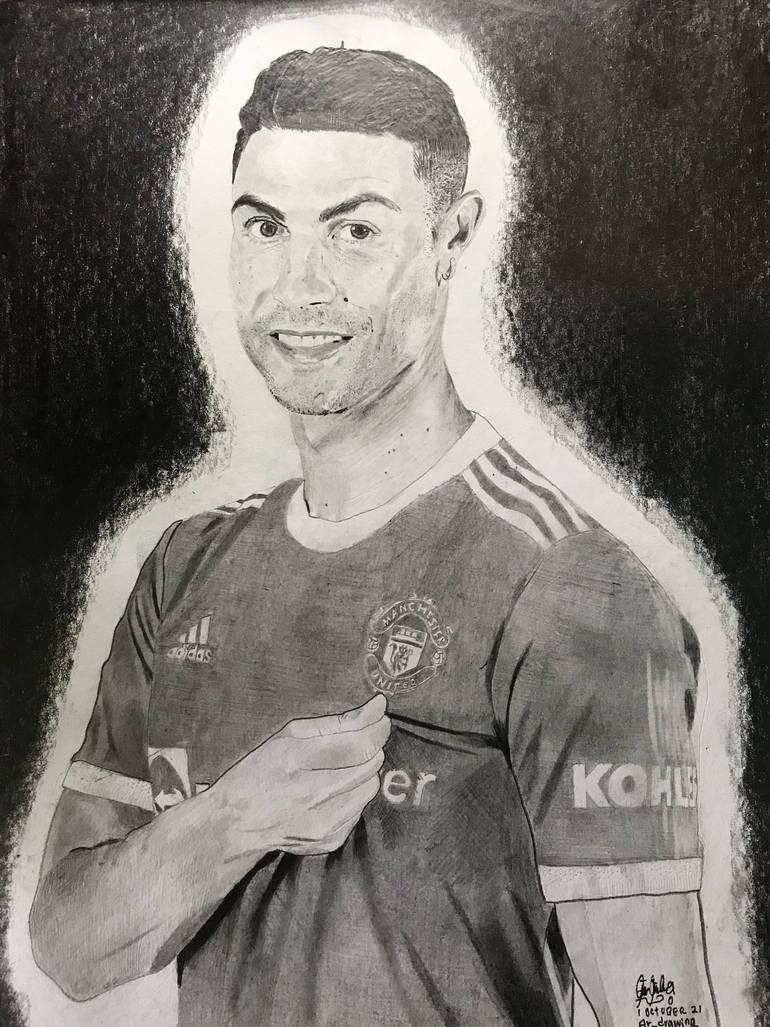
Mastering the art of drawing & creating cartoon football art offers a fantastic way to blend your passion for sports with your creative spark. Whether you're aiming to sketch a simple football for a doodle, design a dynamic scene for a school project, or develop your own cartoon characters, understanding the fundamentals is your first step onto the field. This guide will walk you through the process, from sketching the iconic prolate spheroid to adding vibrant colors and dynamic backgrounds, transforming your static drawing into a lively piece of sports action.
At a Glance: Your Playbook for Cartoon Football Art
- Start with the basics: Learn the essential six steps to drawing a classic American football.
- Add personality: Discover how to make your football more cartoony, realistic, or even give it character.
- Create dynamic scenes: Get tips on depicting movement, adding backgrounds, and integrating players.
- Explore texture: Master techniques using sponges or real materials for authentic visual depth.
- Understand the lore: A quick dive into the history and fun facts about the "pigskin."
- Gather your gear: Know the essential tools you'll need to get started.
- Practice makes perfect: Embrace patience and enjoy the creative process.
Why Cartoon Football Art? It's More Than Just a Game
There's something uniquely appealing about cartoon football art. It captures the energy and excitement of the game, often with an exaggerated flair that brings a smile to your face. Unlike hyper-realistic depictions, cartoon art gives you freedom – freedom to bend reality, emphasize features, and inject personality. You're not just drawing a ball; you're creating a story, a moment, or even a character out of an inanimate object.
Think about it: from beloved mascots to animated sports shorts, cartoon football art transcends the actual game, becoming a cultural touchstone. It's a fantastic entry point for aspiring artists because it's approachable, forgiving, and immediately recognizable. Plus, given that American football is the most popular sport in the United States, there's always an audience ready to appreciate your work.
The Anatomy of a Cartoon Football: A Step-by-Step Guide
Before we tackle complex scenes, let's nail the fundamental building block: the football itself. This isn't just about drawing an oval; it's about capturing the specific, less-than-round shape known as a "prolate spheroid." Grab your pencil, paper, and an eraser – those are your essential tools. Coloring materials are optional for now, but we'll get to them!
Step 1: The Iconic Outline – Shaping Your Pigskin
Every great drawing begins with a solid foundation. For a football, that means getting the basic shape just right.
- Start with a gentle curve: Begin by drawing a long, smooth, curved line. This will form the top contour of your football. Don't press too hard; you want a line you can easily refine or erase.
- Mirror image: Now, draw a second, identical curved line below the first, mirroring its shape. These two lines should connect at gentle points at each end.
- Refine the "prolate spheroid": The result should be a smooth, roughly oval shape with distinct, curved tips, much like a classic rugby ball but often a bit more elongated and pointed at the ends for American football. Take your time to make these curves as fluid and symmetrical as possible. Remember, this isn't a perfect circle or a simple egg shape; it has a unique, aerodynamic elegance.
Practical Tip: Use light pencil strokes for this initial outline. It allows you to make corrections easily without leaving deep indentations on your paper. Precision here sets the stage for everything that follows.
Step 2: Adding the Signature Stripes – The Game-Ready Detail
Once you have your basic shape, it's time to add one of the football's most recognizable features: the stripes. These small details are crucial for instantly identifying it as an American (or Canadian) football.
- Placement: Near each end of your football, draw two sets of parallel, slightly curved lines.
- Orientation: These lines should run roughly vertically, following the slight curve of the football's body. Think of them as wrapping around the ball, even though you're drawing them on a flat surface.
- Width: Keep the stripes relatively narrow. They don't take up a lot of space on a real football, and the same should apply to your cartoon version.
Insight: These stripes aren't just decorative; they often correspond to the grip points and official markings on actual game balls, adding to the authenticity of your cartoon.
Step 3: Crafting the Main Seam Lines – The Spine of the Ball
The long seam lines give the football its structure and help define its form. They run the length of the ball, connecting the tips.
- Trace the length: Draw two curved lines that run from one tip of the football all the way to the other.
- Slight curve and segments: These lines shouldn't be perfectly straight; they should have a subtle curve that follows the contour of the ball. Break them into several sections rather than drawing one continuous line. This mimics how seams are constructed and adds visual interest.
- Avoid the stripes: Ensure these main seam lines do not cross over the stripes you drew in Step 2. They typically start after the stripes and extend to the other end's stripes.
- Light and thin: Draw these lines relatively lightly and thinly, as they are often less prominent than the laces.
Pro Tip: Imagine these lines are defining the "equator" of the football, but running lengthwise. They give the ball a sense of dimension and craftsmanship.
Step 4: Setting the Stage for Stitching – The Laces' Foundation
The stitching, or laces, is arguably the most distinctive feature of an American football. It's what allows quarterbacks to grip and throw with precision. Getting this right is key to your drawing's authenticity.
- Central placement: In the middle of your football, typically near the top center, draw two roughly horizontal, slightly curved lines. These lines will form the base where the laces will sit.
- Connect the ends: Use short, gentle curved lines to connect the ends of these two base lines. This creates a small, elongated rectangular or oval shape that serves as the "pad" for the laces.
Think of it this way: You're sketching the patch of leather where the laces are embedded. This provides the structure for the more intricate lace details to follow.
Step 5: Bringing the Laces to Life – The Heart of the Football
Now for the fun part: adding the iconic lace stitching! This is where your football truly comes alive.
- Center line: Draw another curved line down the absolute center of the stitching base you just created. This acts as a guide for your individual stitches.
- Cross-hatch pattern: Now, use short, curved lines to create a series of "X" or curved "V" shapes that cross over the central line and the original base shape. These represent the individual stitches or grommets through which the laces pass.
- Fill the base: Continue adding these curved shapes, alternating their direction slightly, to fill the entire stitching base from end to end. Aim for a consistent pattern, but don't worry about perfect uniformity – real laces have a handmade quality.
Historical Note: American football is sometimes referred to as "pigskin" because early footballs were made from inflated pig's bladders. While that's no longer the case (modern balls use cow leather, plastic, or rubber), the term persists!
Step 6: Mastering the Art of Color – Giving Your Football Life
You've got the lines, now add the color! This is where you can truly express yourself, though tradition offers a great starting point.
- Traditional colors: American footballs are typically a rich brown. The stripes and stitching are usually white or a light tan.
- Shading for depth: Don't just color it flat! Use various shades of brown for the ball itself. Apply darker shades to the lower portions or edges to create shadow, giving your football a three-dimensional, rounded appearance. Think about where light would hit and where shadows would fall.
- Stripe and stitch shading: For the white stripes and stitching, use very light greys to add subtle shading, preventing them from looking flat. This adds texture and realism.
- Experimentation is key: While tradition is a guide, don't feel limited! Footballs can come in many different colors, team logos, or unique designs. Maybe your cartoon team has a purple football, or one with a fiery pattern. This is your chance to experiment and make your art unique.
Creative Tip: If you're using colored pencils, apply several layers of color, building up the depth. For markers, use a lighter shade as a base and add darker tones for shadows.
Beyond the Ball: Elevating Your Football Art
Drawing a standalone football is a great start, but the real fun begins when you put it into context and infuse it with personality. This is where your "cartoon" elements truly shine.
Infusing Personality: From Realistic to Cartoony
You have the basic form; now, decide how far you want to push the "cartoon" aspect.
- Enhance cartoony appearance: To make it more cartoony, consider exaggerating certain features. Maybe the laces are extra bouncy, or the tips are comically pointed. You could even give your football eyes, a mouth, or little arms and legs to turn it into a character! Think about what emotions or actions you want to convey.
- Add realism (with a cartoon twist): If you want a more grounded cartoon, focus on realistic textures. This means adding small dimples or a pebbled pattern to mimic the leather grain. Even in a cartoon, these details can make the object feel more tactile. The key is to simplify these realistic elements rather than replicating them perfectly.
Putting Your Ball in Motion: Action Scenarios
A static football is fine, but a football in action tells a story.
- Flying through the air: Draw motion lines behind the ball to indicate speed and direction after it's been kicked or thrown. You can even add a subtle blur effect to the edges.
- Mid-catch or run: Integrate your football with a player. A player catching it, tucking it under an arm, or even fumbling it adds drama. This requires some basic understanding of figure drawing, but even simple stick figures interacting with the ball can convey action.
- Impact zones: If it's being kicked, you might show a slight indentation where the foot would connect, or a burst of energy lines around it.
Setting the Scene: Backgrounds and Context
A background grounds your drawing and tells the viewer where this football belongs.
- Simple field: A basic green expanse for grass, perhaps with a few white yard lines, immediately sets a football field context. Keep it simple so the football remains the focus.
- Detailed stadium elements: For a more ambitious piece, consider adding elements like goalposts, stadium lights, or even a glimpse of cheering fans in the stands. Again, simplify these for a cartoon style. A few curved lines can represent stadium tiers, and dots can be a crowd.
- Weather elements: Is it a sunny day? A rainy game? Add a few sun rays or rain streaks to enhance the atmosphere.
Adding Depth: Essential Equipment
To further contextualize your football art, consider adding other elements of the game.
- Boots and pads: A pair of football boots near the ball, or even a glimpse of shoulder pads or a helmet, reinforces the theme.
- Goalposts: Simple goalposts in the background or foreground immediately place your football within the game environment.
- Team paraphernalia: Add a team flag, a water bottle, or a coach's clipboard to hint at a larger narrative.
The Power of Pacing: Take Your Time
Remember, art isn't a race. Rushing through your drawing can lead to frustration.
- Slow down: Especially when drawing smooth shapes and intricate details like the laces, patience is your best friend.
- Pencil first, then ink: Always start with a pencil. This allows you to sketch, refine, and erase mistakes without damaging your paper. Once you're happy with the pencil lines, you can go over them with a pen or marker for a cleaner, more defined look. This two-stage process is standard for many artists.
Unleashing Texture: Creative Techniques
The texture of a football is distinctive. Recreating it, even in a cartoon, adds a layer of depth and visual interest.
- Sponge magic: For a quick and effective dappled texture, try this:
- Take a small piece of an art sponge (or even a kitchen sponge, thoroughly cleaned).
- Dip it lightly into brown paint (acrylic or poster paint works well).
- Gently dab the sponge over the colored surface of your football drawing. This creates a slightly uneven, dimpled effect that mimics the pebbled leather of a real football.
- Tactile realism (with adult help): Want to go truly next-level?
- With adult supervision, cut a small piece of actual leather-like material (e.g., fake craft leather from a hobby store, or even a small patch from an old, discarded football if you can find one).
- Carefully cut this material to fit the shape of your drawn football.
- Glue it onto your drawing. This provides an amazing, real tactile texture that transforms your 2D art into a mixed-media masterpiece. This technique is often used in collage art and can make your football truly pop off the page.
For those eager to dive deeper into the vast world of sports illustration and expand their artistic skills, you might find it helpful to explore the world of cartoon football beyond just the ball itself. There's a whole universe of characters, actions, and environments waiting for your creative touch.
A Quick Dive into Football History & Lore
Understanding the subject you're drawing can add an extra layer of appreciation and even inspire unique artistic interpretations. American football has a rich, fascinating history.
From "Prolate Spheroid" to "Pigskin"
We've already mentioned the term "prolate spheroid" – that's the scientific name for the football's less-than-round shape. It's designed for throwing and kicking with precision, giving it a distinct flight path.
The nickname "pigskin" is a charming, though slightly misleading, historical artifact. While early footballs were indeed made from inflated pig's bladders, actual pig skin wasn't typically used. Today, most high-quality footballs are made of cow leather, but plastic and rubber versions are also common, especially for youth leagues and recreational play.
A Glimpse into the Past: Folk Football and Beyond
The concept of kicking a ball around is ancient.
- Ancient roots: Kicking games similar to football have existed for thousands of years. Evidence points to such games being played in China, Greece, and possibly Rome over 2,000 years ago.
- Medieval chaos: Fast forward to 14th and 15th century Europe, and you find "folk football." These were often chaotic, rough-and-tumble affairs where entire villages competed to get a ball through an opposing village's church doors. These games, potentially rooted in pre-Christian fertility rituals, were sometimes banned due to the widespread property damage and violence they caused!
- The Renaissance and evolution: Renaissance-era Italy saw the introduction of rectangular boundaries and more organized play. This gradual evolution eventually led to the distinct sports we know today as soccer (association football) and rugby, from which American football later diverged.
The Evolution of Materials
The oldest surviving football dates back to the 1500s – a testament to the game's enduring appeal. From animal bladders to sophisticated cow leather and synthetic materials, the football itself has come a long way. These material changes often influenced how the game was played, enabling better grip, more consistent throws, and greater durability.
Essential Tools for Your Artistic Journey
You don't need a professional art studio to start drawing cartoon football art. Here's what's truly essential:
- Pencil: A good graphite pencil (HB or 2B is a versatile choice) for sketching light outlines.
- Paper: Any standard drawing paper will do, but a slightly heavier stock can withstand more erasing and coloring.
- Eraser: A quality eraser (kneaded or vinyl) is invaluable for corrections without damaging the paper.
- Optional Coloring Materials:
- Colored pencils: Great for blending and layering.
- Markers: Offer vibrant, bold colors.
- Crayons: Simple and accessible, especially for younger artists.
- Paints (for texture): Acrylic or poster paints if you're experimenting with sponge textures.
- Sponge (for texture): A small art sponge or a piece of a clean kitchen sponge.
- Ruler (optional): For drawing straight background lines (like yard markers) if you choose.
Frequently Asked Questions About Cartoon Football Art
Let's address some common questions you might have as you embark on your cartoon football art journey.
Q: How do I make my football look more 3D and less flat?
A: Shading is key! Use darker shades of your chosen color on the portions of the football that would naturally be in shadow (e.g., the underside, areas furthest from the light source). You can also use cross-hatching or stippling for texture, which also adds dimension.
Q: What if my stripes or laces aren't perfectly symmetrical?
A: Don't worry! In cartoon art, perfect symmetry isn't always the goal. Slight imperfections can even add character and a hand-drawn feel. Focus on getting the overall shape and placement right, and the minor variations will contribute to its unique charm.
Q: Can I draw a football from a different angle?
A: Absolutely! Once you master the basic side view, try sketching it from a slightly angled perspective, looking down on it, or even from one end. This requires understanding perspective and how the curved lines will change, but it's a great way to advance your skills. Lightly sketch a central axis first to guide your curves.
Q: How do I draw a player interacting with the ball?
A: Start by sketching simple stick figures for the player, focusing on their pose and action. Then, draw the football in their hands or near their feet, ensuring its size is proportionate to the player. Refine the player's body around the stick figure, adding bulk and clothing. Breaking down complex poses into simple shapes is a great strategy.
Q: Is it okay to trace to learn?
A: Tracing can be a helpful learning tool, especially for understanding proportions and curves. Just make sure you understand why certain lines are drawn where they are, rather than just mindlessly copying. After tracing, try drawing the same object freehand to reinforce what you've learned. It's a stepping stone, not the final destination.
Your Next Play: Continuing Your Artistic Journey
Drawing & Creating Cartoon Football Art is a rewarding endeavor that combines creativity with a love for the game. You now have a solid foundation, from the step-by-step process of drawing the ball to advanced techniques for adding texture, motion, and context.
Remember, every great artist started somewhere. Embrace the process, don't be afraid to experiment, and most importantly, have fun with it. Your unique style will emerge with practice and patience. Keep a sketchbook handy, draw often, and watch as your cartoon football art evolves from simple sketches into dynamic, expressive pieces that capture the thrill of the game. Now go forth and create some amazing art!